press Enter to searchShowing all results:No products found.
Bakelite: Industrial Game Changer
Bakelite, one of the earliest synthetic plastics, may not get the attention it deserves in today’s world of high-tech materials, but its qualities were groundbreaking in the early 20th century.
Created by chemist Leo Baekeland in 1907, Bakelite was the first true plastic – durable, heat-resistant, and electrically insulating – making it a game-changer in many industries, including the manufacture of lighting. The key qualities of Bakelite include heat resistance, electrical insulation, durability and mouldability.
Heat Resistance: One of Bakelite’s standout features is its ability to withstand high temperatures without deforming. This made it ideal for use in environments where heat was a constant factor, such as industrial machinery and pre-LED lighting systems.
Electrical Insulation: Bakelite is an excellent electrical insulator, meaning it doesn’t conduct electricity. This made its use invaluable in electrical components, especially in lighting fixtures where electrical safety was important.
Durability: Unlike early plastics, Bakelite was resistant to cracking and breaking. This ability to resist wear and tear under stress made it a reliable material for industrial applications, where longevity and sturdiness were essential.
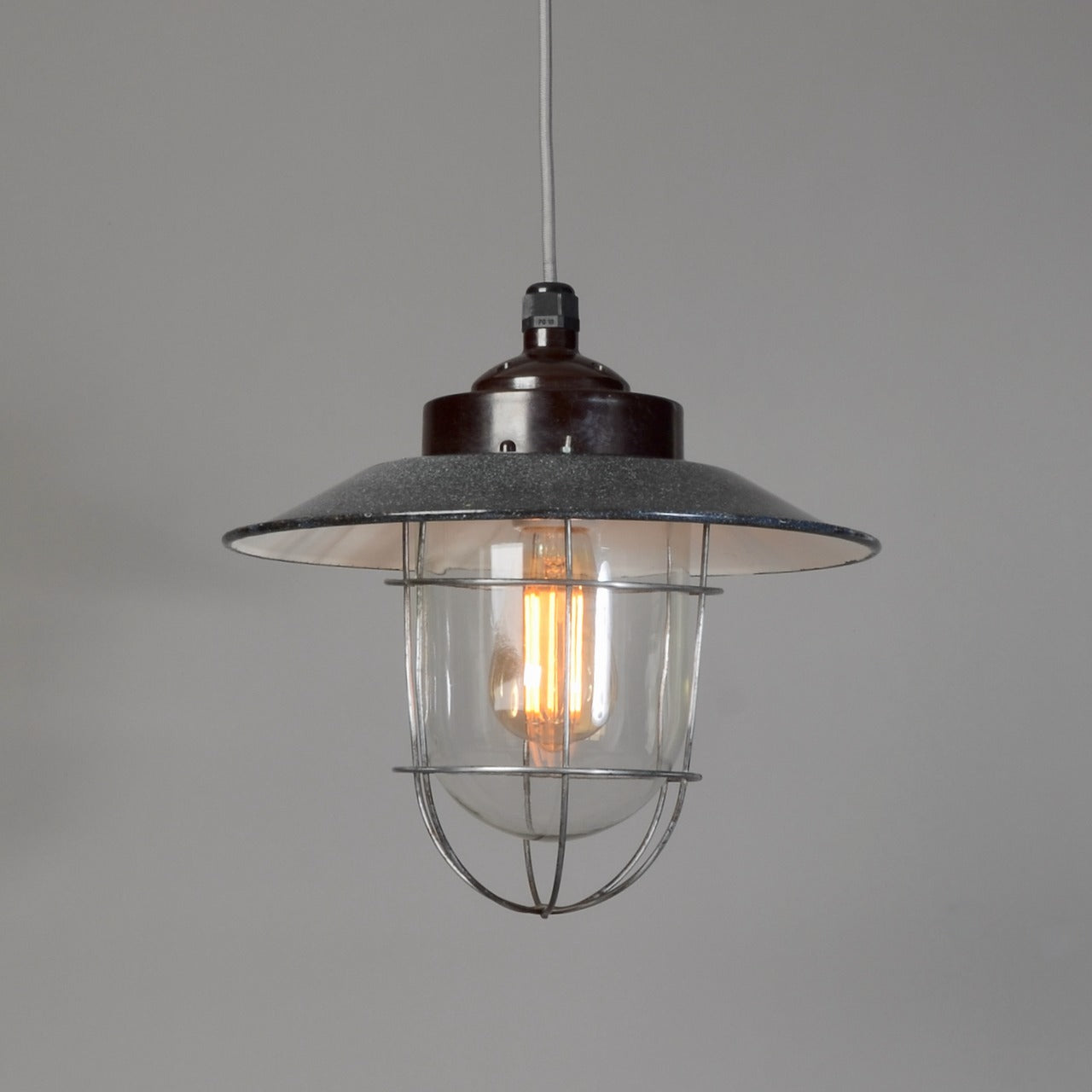
Moldability: Bakelite could be moulded into complex shapes with precision, which allowed for the creation of intricate designs in electrical components, including light switches, sockets, lamp housings, light galleries and pattresses.
All these qualities made Bakelite an ideal material for industrial lighting systems, particularly in the early to mid-20th century. In the era before modern plastics, Bakelite was widely used for manufacturing light fittings, sockets, and electrical components that needed to perform under demanding conditions.
Although Bakelite has largely been replaced by newer materials, it was a pioneering plastic that shaped the development of industrial lighting. Its unique blend of heat resistance, electrical insulation, durability, and moldability made it indispensable in the early days of electrical engineering and industrial design.
Today, Bakelite is highly collectable and remains a reminder of how innovation in material-science can shape entire industries.
After 3 very long days and nights setting up, we finally flung open the doors of our East London pop-up showroom on Friday 4th May. It looks pretty good even if we say so ourselves. Thanks to all those who have found the time
We’re not trend setters and we’ve never tried, we just do what we do and we try to do it well. So when we’re asked what the hotspots are in the world of interiors, we prefer to look to the experts for their scoop. Thus, here is our round-up of the trends when it comes …
We’ve been fancying doing this for a while and have finally got our act together.We’ve found a great glass fronted shop unit in the old Truman Brewery in East London, and will be running a shop there for 10 days in May.
Bakelite: Industrial Game Changer
Bakelite, one of the earliest synthetic plastics, may not get the attention it deserves in today’s world of high-tech materials, but its qualities were groundbreaking in the early 20th century.
Created by chemist Leo Baekeland in 1907, Bakelite was the first true plastic – durable, heat-resistant, and electrically insulating – making it a game-changer in many industries, including the manufacture of lighting. The key qualities of Bakelite include heat resistance, electrical insulation, durability and mouldability.
Heat Resistance: One of Bakelite’s standout features is its ability to withstand high temperatures without deforming. This made it ideal for use in environments where heat was a constant factor, such as industrial machinery and pre-LED lighting systems.
Electrical Insulation: Bakelite is an excellent electrical insulator, meaning it doesn’t conduct electricity. This made its use invaluable in electrical components, especially in lighting fixtures where electrical safety was important.
Durability: Unlike early plastics, Bakelite was resistant to cracking and breaking. This ability to resist wear and tear under stress made it a reliable material for industrial applications, where longevity and sturdiness were essential.
Moldability: Bakelite could be moulded into complex shapes with precision, which allowed for the creation of intricate designs in electrical components, including light switches, sockets, lamp housings, light galleries and pattresses.
All these qualities made Bakelite an ideal material for industrial lighting systems, particularly in the early to mid-20th century. In the era before modern plastics, Bakelite was widely used for manufacturing light fittings, sockets, and electrical components that needed to perform under demanding conditions.
Although Bakelite has largely been replaced by newer materials, it was a pioneering plastic that shaped the development of industrial lighting. Its unique blend of heat resistance, electrical insulation, durability, and moldability made it indispensable in the early days of electrical engineering and industrial design.
Today, Bakelite is highly collectable and remains a reminder of how innovation in material-science can shape entire industries.
Related Posts
Pop-up in full swing
After 3 very long days and nights setting up, we finally flung open the doors of our East London pop-up showroom on Friday 4th May. It looks pretty good even if we say so ourselves. Thanks to all those who have found the time
A Powerful Past
No matter how big or small, ceramic or metal, wall or ceiling mounted, it will undoubtedly spark interest
2022 Lighting Trends
We’re not trend setters and we’ve never tried, we just do what we do and we try to do it well. So when we’re asked what the hotspots are in the world of interiors, we prefer to look to the experts for their scoop. Thus, here is our round-up of the trends when it comes …
Trainspotters comes to London…
We’ve been fancying doing this for a while and have finally got our act together.We’ve found a great glass fronted shop unit in the old Truman Brewery in East London, and will be running a shop there for 10 days in May.